
Sewing Custom Table Linens: Tablecloths & Runners for Weddings and Everyday Use
Published by NannetteD on 3rd Apr 2026
Creating your own table linens is one of the most effective ways to elevate a space. Whether you're planning a wedding, styling a dinner party, or sewing for clients, custom tablecloths and table runners give you control over color, scale, and finish so everything works together more seamlessly.
When you start with high-quality fabric, the difference shows immediately. Fabrics that are properly finished after printing tend to offer richer color, better wash performance, and a softer hand feel than many off-the-shelf options. That makes them especially well suited for table linens that are meant to be used, washed, and enjoyed over time.
This guide walks through how to sew table linens for weddings, events, and everyday entertaining, including sizing, fabric selection, and finishing techniques that help your linens hang cleanly and hold up with repeat use.
If you're planning a project, you can explore fabric by the yard or compare base fabrics in our Fabric Selection Guide to find the right option for your table linens.
Standard Table Sizes for Table Linens
Most tables used for dining and events follow standard dimensions, which makes planning your fabric needs more straightforward.
- 6 foot table: 72" x 30"
- 8 foot table: 96" x 30"
The key variable is the drop, or how far the fabric hangs over the edge.
- Casual drop: 8" to 10"
- Formal drop: approximately 25" to 30"
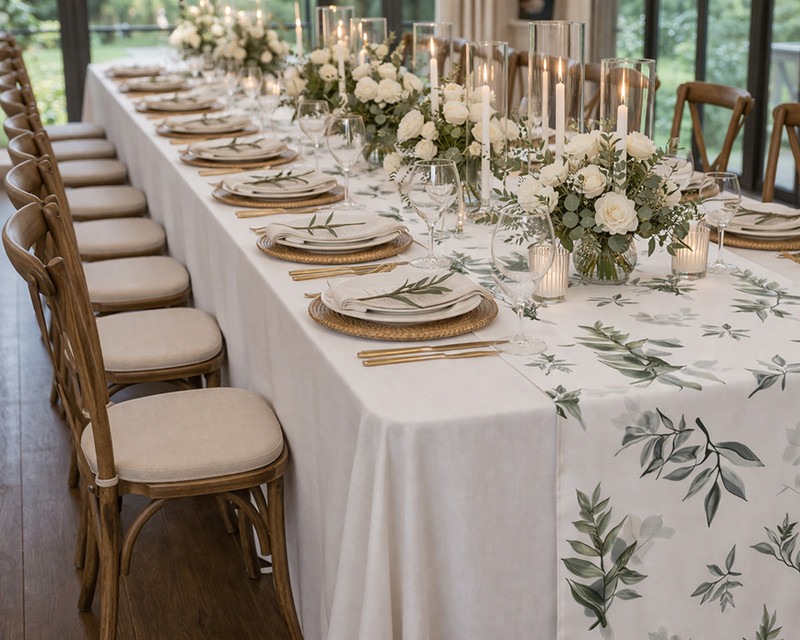
For banquet-style layouts where multiple tables are placed end to end, you can sew continuous linens or runners to create a more cohesive, intentional look across the full table.
How to Measure for a Tablecloth or Table Runner
Use this simple formula to determine finished size:
Table length + drop + drop = finished length
Table width + drop + drop = finished width
For example, an 8 foot table with a 10" drop:
- Length: 96" + 10" + 10" = 116"
- Width: 30" + 10" + 10" = 50"
Always add extra for hemming and squaring before cutting.
For table runners, standard widths are typically 12" to 16", with an additional 6" to 12" of length extending past each end of the table.
Best Fabrics for Table Linens
Fabric choice has a direct impact on how your table linens look, hang, and perform over time. You want a fabric that presses well, holds its shape, and maintains its color after washing.
Fabrics printed with fiber-reactive dyes are especially well suited for table linens because the color bonds with the fibers rather than sitting on top of the fabric. The result is a softer hand and longer-lasting color, even with frequent use.
- Cotton: versatile, easy to sew, and a reliable choice for most projects
- Cotton-linen blends: add texture while maintaining structure
- Linen: relaxed, natural drape with an elevated feel
- Polyester: durable and practical for event settings
All fabrics are printed to order, which allows you to coordinate colorways across runners, tablecloths, and other elements without being limited to pre-made options.
To compare base fabrics and find the right fit for your project, visit our Fabric Selection Guide.
Prepare Fabric Before You Cut
Before cutting fabric for table linens, it’s a good idea to wash, dry, and press it according to the care instructions for that specific fabric. This helps reduce shrinkage and helps your finished tablecloth or runner hold its shape after the first wash.
Keep in mind that some digitally printed fabrics are already finished as part of the printing process. For example, fabrics printed with fiber-reactive dyes are steamed, washed, and dried after printing. This finishing process helps set the color within the fibers, gives the fabric a softer hand, and can make cutting, pressing, and hemming easier from the start. That can be especially helpful when sewing larger pieces like tablecloths and long table runners.
Regardless of the fabric you choose, always cut parallel to the selvage, or the finished woven edge of the fabric. This helps keep your table linens straight so they hang evenly and do not twist across the table.
How to Sew a Rectangular Tablecloth
Step 1: Cut the Fabric
Cut your fabric to the required size plus hem allowance. A standard double-fold hem requires about 1" per side.
Step 2: Square the Fabric
Ensure all corners are true before sewing so the tablecloth hangs evenly.
Step 3: Press and Sew the Hem
Fold 1/2" to the wrong side and press.
Fold another 1/2" and press.
Stitch close to the inner fold.
Step 4: Finish Corners
Mitered corners provide a cleaner, more tailored finish and reduce bulk at the edges.
How to Sew a Table Runner
Table runners are a simple way to introduce pattern and color without covering the entire table.
Step 1: Cut fabric to size plus hem allowance.
Step 2: Press a 1/2" fold on all sides.
Step 3: Fold again 1/2" and press.
Step 4: Stitch around all edges.
If you are working with a lighter fabric, adding a narrow strip of interfacing through the center can help the runner lie flat and feel more substantial under place settings and decor.
Sewing for Long Banquet Tables
For weddings and large gatherings, multiple tables are often combined into long banquet-style layouts. Sewing a continuous runner or tablecloth helps unify the entire setup.
When joining panels, use a clean seam finish such as a French seam to enclose raw edges and create a more polished result.
If your fabric features a printed design, take time to align the pattern across seams so the final piece reads as continuous rather than pieced together.
Details That Improve the Final Result
- Wider hems: add weight and improve drape
- Topstitching: keeps edges crisp after washing
- Mitered corners: reduce bulk and refine the finish
- On-grain cutting: prevents twisting
These small details make a noticeable difference, especially for event linens or pieces that will be used repeatedly.
Using Custom Table Linens
Custom table linens work across a wide range of applications. A full tablecloth can soften a space for formal dining or events, while a runner can introduce pattern and tie together a color palette.
Because fabrics are available by the yard and printed to order, you can create coordinated pieces across multiple tables, settings, or even multiple events.
Final Thoughts
Sewing your own table linens allows you to create pieces that fit your table, your style, and your intended use. With the right fabric and a few thoughtful construction techniques, your linens will not only look better, they will perform better over time.
Explore artist-designed fabrics by the yard, compare options in our Fabric Selection Guide, or start planning your next project with custom fabric for table linens, runners, and event decor designed to be used and enjoyed over time.