
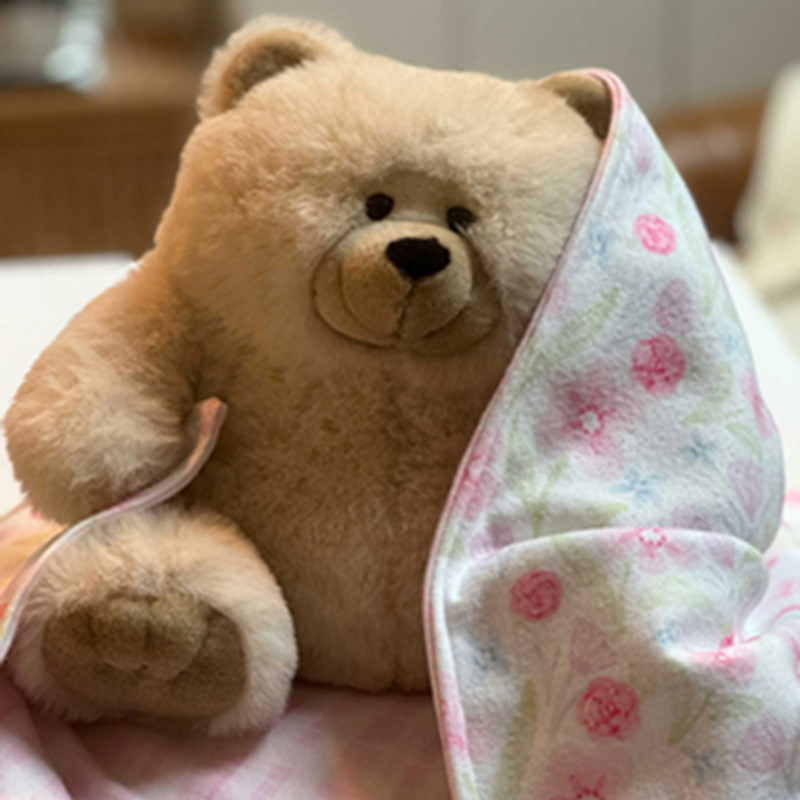
Fleece Baby Blanket Pattern | Free Project
Published by Nannette D. | The Textile District on Feb 21st 2025
Updated September 2026 to reflect current Polyester Fleece information, blanket sizing and sewing guidance.
A two-sided fleece blanket is a simple beginner sewing project that makes a useful handmade gift for babies, children, college students and anyone who appreciates a soft throw for cooler weather.
This tutorial shows you how to sew two coordinating layers of Polyester Fleece together with clean finished edges. The same construction method can be adapted to different blanket sizes, from a small supervised-use baby blanket or tummy-time blanket to a lap blanket, stadium blanket or larger throw.
DIY Two-Sided Fleece Blanket
Skill level: Beginner
Construction: Two layers of fleece sewn right sides together, turned and topstitched
Seam allowance: ½"
The amount of fabric you need depends on the finished blanket dimensions and the printable width of the Polyester Fleece. Calculate your finished size first rather than assuming one yard will work for every blanket.
Why Use Polyester Fleece for a Blanket?
Polyester Fleece is soft, warm and easy to care for, making it well suited to blankets, throws and other cozy sewn projects.
Because fleece has more loft than a lightweight woven fabric, a simple construction can create a substantial finished blanket without batting or complicated quilting.
The Textile District’s Polyester Fleece is printed using sublimation, a printing process suited to polyester fibers. The result is vibrant printed color while maintaining the soft surface and hand of the fleece.
Compare Polyester Fleece & Our Other Base Fabrics
Choose Two Coordinating Prints
A reversible blanket gives you two surfaces to work with, so the fabrics can match, coordinate or intentionally contrast.
Try pairing:
- a floral with a plaid or stripe
- a larger focal print with a smaller-scale coordinate
- two patterns that share a common color
- a bold design with a quieter supporting print
The original blanket shown in this project features Lush Gardens and Pretty Plaid by SweetbunnyArts.
Materials You Will Need
- Polyester Fleece for the front
- Coordinating Polyester Fleece for the back
- Thread to match or contrast
- Fabric scissors or rotary cutter and cutting mat
- Sewing clips or pins
- Sewing machine
- Ruler or measuring tape
- Blunt point turner or similar tool
Order enough of each fabric to accommodate the finished blanket dimensions plus seam allowances. Check the current printable width of Polyester Fleece before calculating yardage.
Step 1: Prepare & Cut the Fleece
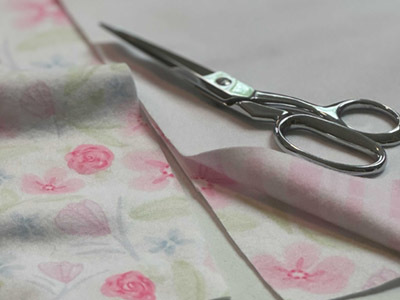
Cut the front and back fleece pieces to the same dimensions.
Lay the two pieces flat with the right sides facing each other. Smooth the fleece gently, align the edges and trim if necessary so the layers are even.
Before cutting, check the direction of both prints. If either fabric contains a directional motif, stripe or large focal element, make sure it will appear correctly on the finished blanket.
Step 2: Pin or Clip the Layers
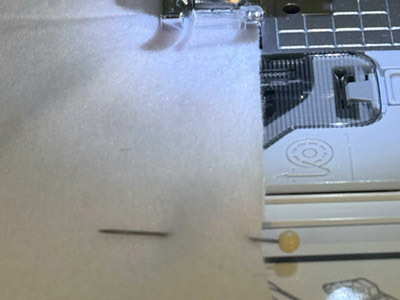
Pin or clip the two fleece layers together around all four sides.
Leave an opening of approximately 5–6" along one edge. This opening will be used to turn the blanket right side out after sewing.
For a larger blanket or heavier fleece, a slightly wider turning opening may be easier to work with.
Step 3: Sew Around the Blanket
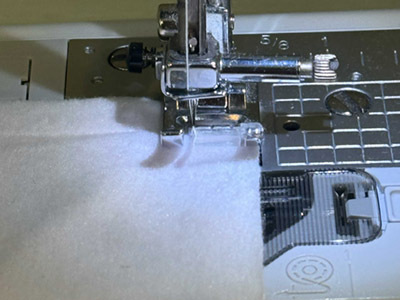
Using a ½" seam allowance, sew around all four sides of the blanket.
Backstitch at the beginning and end, and remember to leave the turning opening unsewn.
A longer stitch length can sometimes feed fleece more smoothly. Test your machine settings on a scrap before sewing the blanket.
Step 4: Trim the Corners
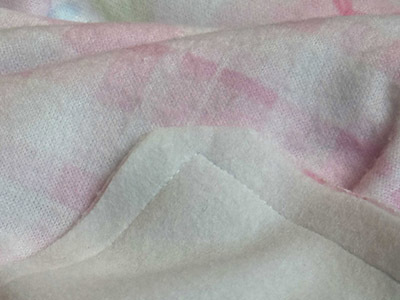
Trim diagonally across each corner without cutting through the stitching.
This removes excess bulk and helps the corners turn more cleanly.
Step 5: Turn & Shape the Blanket
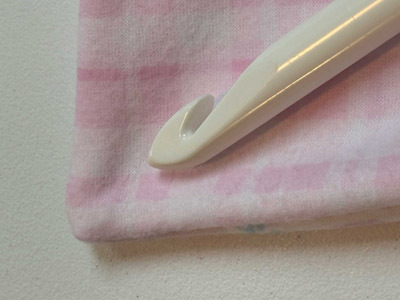
Turn the blanket right side out through the opening.
Gently shape the corners with a blunt point turner, large plastic crochet hook or similar tool. Avoid using anything sharp that could push through the fleece or stitching.
Smooth the layers with your hands so the seams sit evenly around the perimeter.
Step 6: Topstitch to Finish
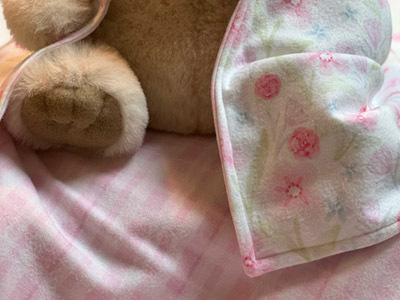
Fold the raw edges of the turning opening inward so they align with the sewn seam.
Topstitch around the entire blanket approximately ⅛"–¼" from the edge. The topstitching closes the opening and helps keep the two fleece layers aligned.
Backstitch when you return to the starting point.
Suggested Fleece Blanket Sizes
Blankets can be made in nearly any dimensions. Use these as general planning guides and adjust them to suit the recipient and available fabric width.
Baby & Child Blanket Ideas
- Small baby blanket: approximately 30" × 30"
- Tummy-time or play blanket: approximately 36" × 36"
- Child-size throw: approximately 36" × 50"
Baby safety note: Small fleece blankets can be useful for supervised tummy time, stroller outings and other attended use. Follow current safe-sleep guidance for infants; loose blankets should not be placed in an infant’s sleep space.
Lap & Stadium Blankets
- Lap or stadium blanket: approximately 50" × 60"
- Generous throw: approximately 50" × 70"
These sizes work well for sofas, reading chairs, sporting events and college dorm rooms.
Large Throws
- Large throw: approximately 60" × 80"
- Oversized blanket: size as desired based on available fabric width and intended use
Larger blankets require significantly more than one yard per side, and the available printable width may affect construction. Check the Polyester Fleece specifications before ordering.
Fleece Blanket Gift Ideas
A handmade fleece blanket can be adapted to the recipient simply by changing the print and color palette.
For Babies & Young Children
Consider gentle florals, animals, stars, botanicals, geometrics or other playful artist-designed prints. A smaller blanket also pairs well with another handmade gift or nursery accessory.
For College Students
A throw-sized fleece blanket is useful for a dorm room, reading chair or study space. Choose colors and patterns that coordinate with their bedding or personal style.
For Sports & Outdoor Events
Use stripes, plaids, geometrics or team-inspired color combinations without reproducing protected logos or trademarks.
For Everyday Home Use
Florals, abstracts, plaids and quieter tonal patterns can turn a simple fleece blanket into a useful accent for a sofa, reading chair or guest room.
Think About Print Scale
A blanket provides a much larger printed surface than many sewing projects, so both small and large-scale patterns can work well.
Large florals, botanicals and geometrics have room to make a statement, while smaller repeats create a more consistent allover pattern.
For a reversible blanket, the two sides do not need to use the same scale. Pairing one larger print with a smaller coordinate can create a balanced combination.
Find Artist-Designed Fabric for Your Blanket
Browse The Textile District’s artist-designed catalog, choose the design and colorway you like, then select Polyester Fleece when it is available as a base-fabric option.
Browse Artist-Designed Fabric by the Yard
If you have your own artwork, you can also print your design on Polyester Fleece through our custom fabric printing service.
Compare Fabric Options
Polyester Fleece is a good choice when warmth and softness are priorities. For lighter blankets, quilts or other projects, a woven cotton or another base textile may be more appropriate.
If you want to compare the fabrics in hand, the Ground Fabric Swatch Kit includes samples of our current textile options.